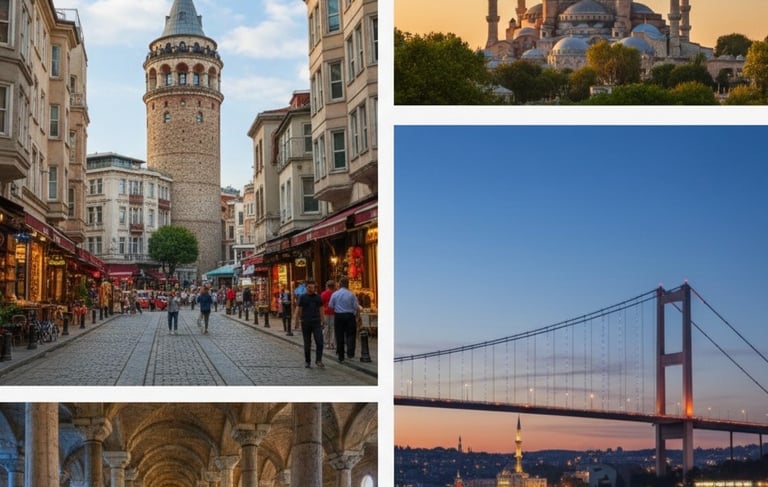
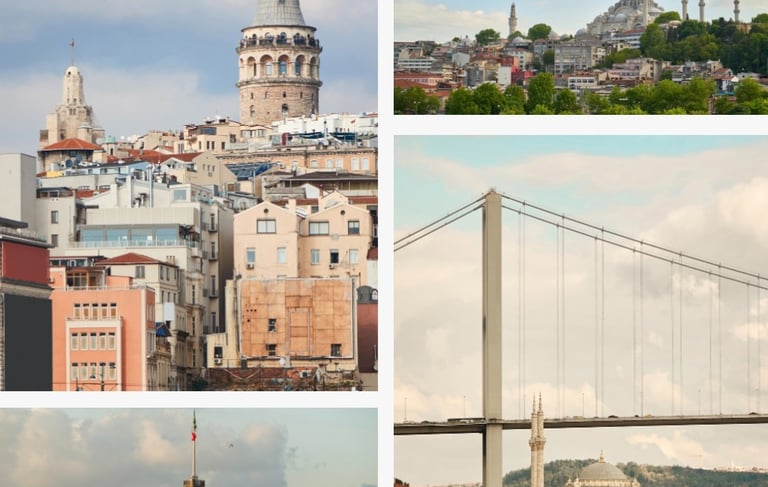
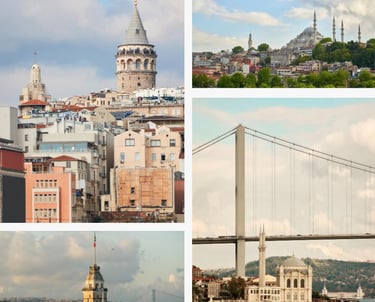
Embracing two continents, Istanbul is one of the large romantic cities with one side reaching out to Asia and the other side reaching Europe. In the heart of the city, the waters of the Bosphorus, the Black Sea, the Marmara Sea and the Golden Horn flow. The capital of three previous empires: Roman, Byzantine and Ottoman, Istanbul embraces the modern age while honoring and preserving the legacy of its past.
Even though thousands of years have passed, Istanbul still maintains its geographical importance. Today, Istanbul is a giant metropolis that hosts approximately sixteen million people, uniting continents, cultures and religions, and is one of the largest business and cultural centers in the region.
The official language in Turkey is Turkish. Other spoken languages include English, Kurdish, Arabic, Armenian and Greek. 99% of Turkey is Muslim (Sunni). However, Turkey's geographical proximity, which is a bridge between Eastern Europe and Western Asia, has transformed this country into an extremely tolerant and adaptable civilization.
The currency of Turkey is Turkish Lira. There are banknotes of 5, 10, 20, 50, 100 and 200 Lira in general circulation. There is also a 1 Lira coin. Lira is equal to 100 Kurus. Pounds, Euros and Dollars can be easily converted into Turkish Lira at all banks, post offices (PTT) and foreign exchange offices. You can get a good exchange rate at jewelry stores in many cities. Many shops offer currency exchange at a favorable exchange rate, and most accept sterling. If furniture, curtains, white goods, etc. If you are buying, it is usually possible to pay in Euros, US Dollars or Pounds and get a very affordable price.
In Istanbul, summer temperatures average around 78-86 degrees Fahrenheit / 25-30 degrees Celsius; Winters are cold but generally above freezing, with moderate rainfall and perhaps light snow. The best times to visit Turkey are spring and autumn, as the weather in Istanbul is almost perfect. Visiting before mid-June or after August can also help you avoid mosquitoes. The Black Sea coast is best visited between April and September; It may still rain but not too much.
Light, cotton summer clothes and cardigans for the evenings are recommended along the Marmara, Aegean and Mediterranean coasts. Throughout the Black Sea, Central and Eastern Anatolia, it may be necessary to dress warmer for cool evenings at higher altitudes. Comfortable shoes are essential when long-distance walking is required to visit archaeological and historical sites. Doctors recommend using a sun hat and sunglasses in summer.
To visit mosques, women must wear a headscarf and clothing from shoulders to elbows. Men should wear long trousers.